
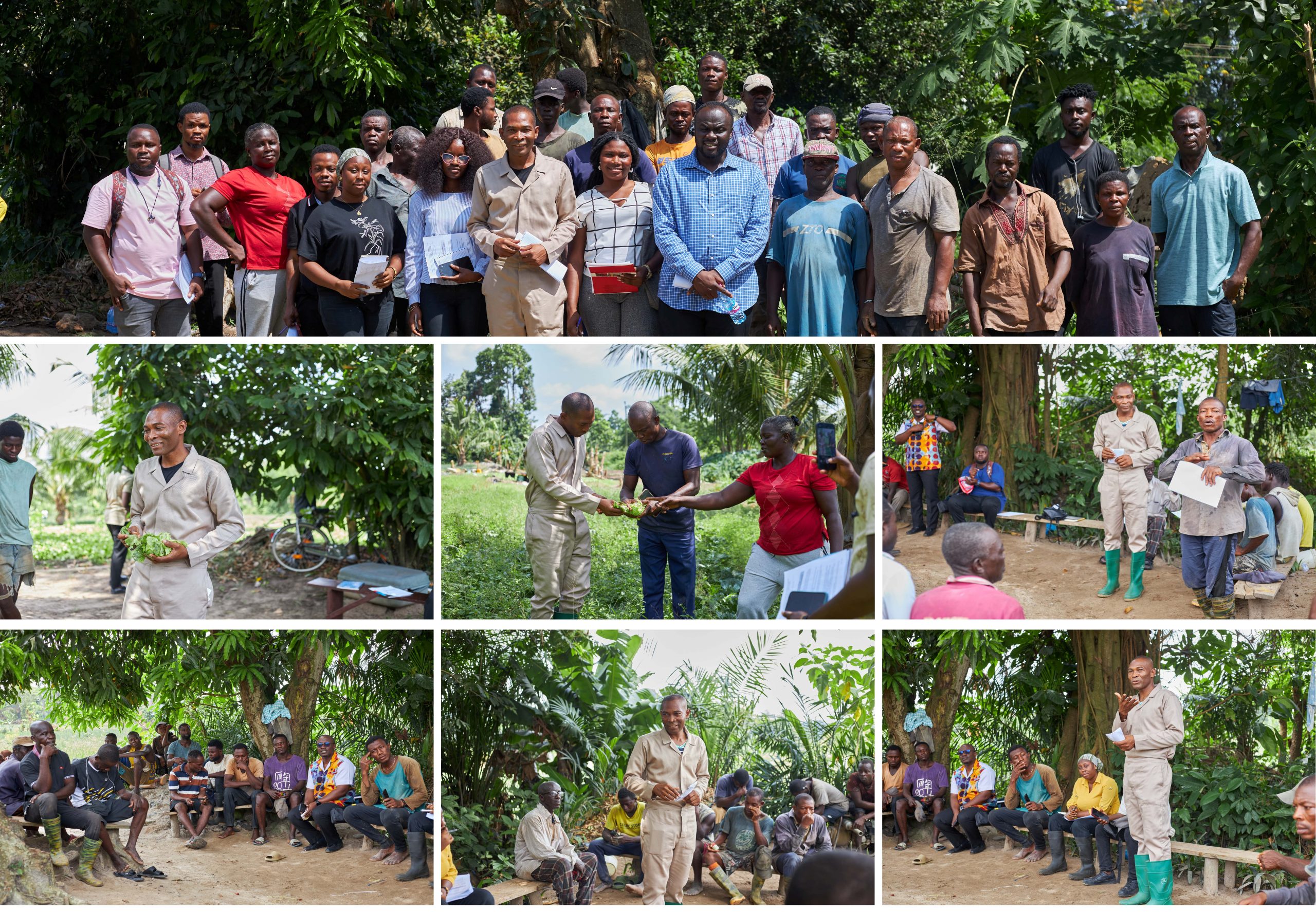
The Nkabom Collaborative, under the Mastercard Foundation in partnership with Kwame Nkrumah University of Science and Technology (KNUST), Kumasi, has held 3 days practical training for farmers in and around KNUST in modern agricultural practices, good agricultural practices (GAP), safe pesticide use, organic production, soil fertility management, business skills and post-harvest handling aimed at boosting productivity and meeting food safety standards.
Dr. Eli A. Gaveh, who facilitated the session at the KNUST farm, commended the farmers for their contributions to campus food production and underscored the importance of adopting best practices to improve crop quality. “Investors and consumers increasingly demand vegetables that meet laboratory-tested standards. Farmers who follow these practices stand to gain recognition and awards,” he said.
Farmers were taught site selection techniques, including choosing well-drained soils and avoiding areas near waste dams or effluents. Raised beds of 15–20 cm was recommended to improve drainage and reduce disease pressure.
Participants were introduced to record-keeping practices, which many described as not new but essential for tracking inputs, activities and yields.
Soil fertility management was emphasized, with advice to conduct soil testing every two years for nitrogen, phosphorus, potassium and pH. Trainers recommended compost application of 10–15 tons and biochar incorporation to improve water retention, reduce acidity and boost microbial activity.
The training also addressed integrated pest management, including crop rotation with legumes, regular field scouting, and distinctions between insecticides and fungicides. Farmers shared challenges with pesticide use, citing limited capital for fungicides and concerns about insecticide effects on lettuce crops.
The guidelines aim to help farmers improve productivity, reduce losses and meet urban market standards. KNUST pledged to continue providing training and certifying farmers who comply with food safety requirements.
Participants were trained in site selection, raised-bed preparation, record keeping, soil testing, compost application and biochar use. Dr. Gaveh explained that biochar improves water retention, reduces soil acidity and enhances microbial activity.
The session also covered integrated pest management, including crop rotation with legumes, regular field scouting and correct pesticide application. Farmers discussed challenges with pesticide costs, noting that reliance on insecticides sometimes damaged crops such as lettuce. The facilitator urged greater use of fungicides to prevent disease and protect yields.
”This training will help farmers reduce losses, meet urban market standards and qualify for certification under KNUST’s food safety programme”, he said.