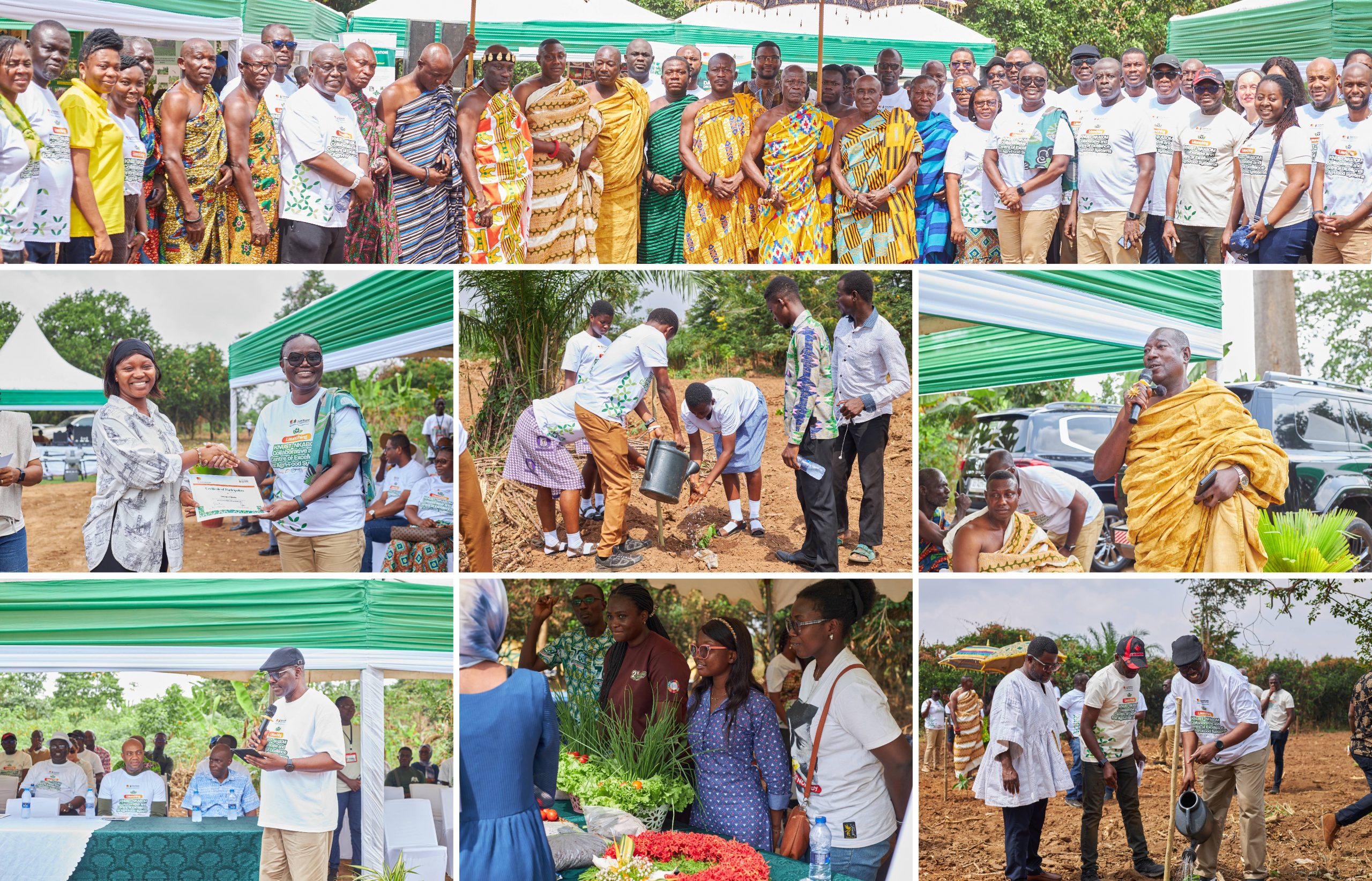
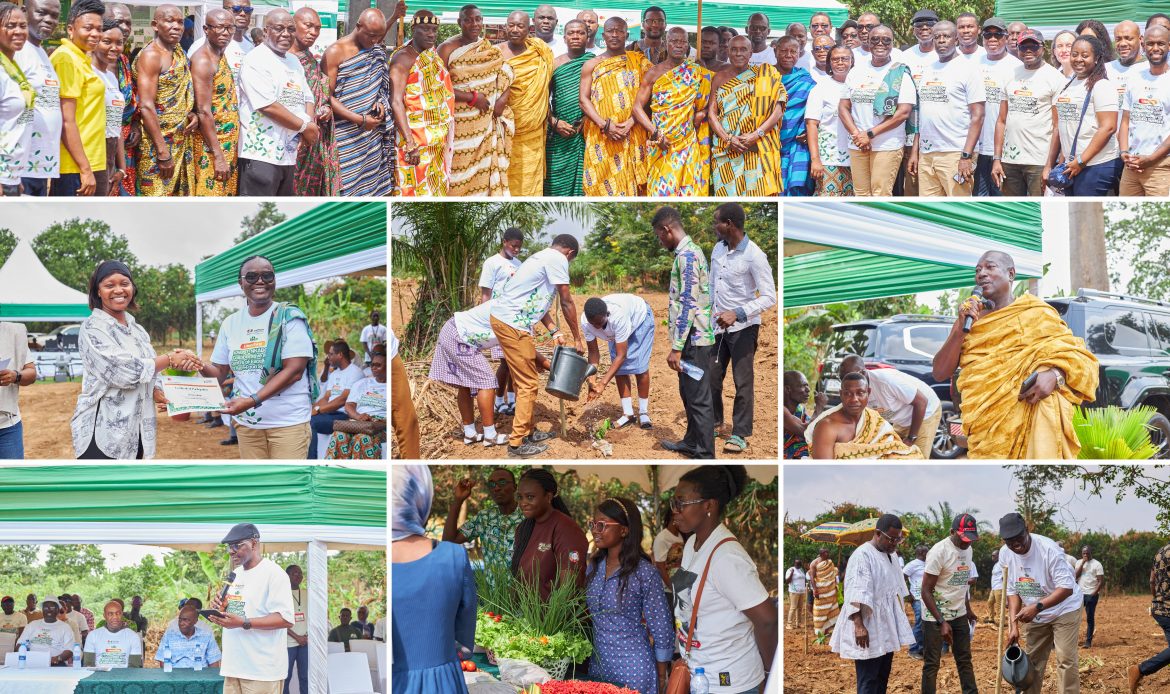
The Kwame Nkrumah University of Science and Technology (KNUST), Kumasi, in partnership with the Mastercard Foundation through the Nkabom Project, has officially launched the KNUST Nkabom Collaborative and inaugurated the Centre of Excellence in Agri-Food Systems at the University’s Anwomaso Farms.
The ceremony, held on Farmers’ Day, represents a major milestone in advancing Ghana’s agri-food ecosystem through research, innovation, and youth empowerment.
At the launch, Professor William Otoo Ellis, Principal Investigator of the KNUST Nkabom Collaborative, described the initiative as a strategic response to Ghana’s evolving demographics and food system challenges.
“Today is not simply the unveiling of two initiatives. It is a reaffirmation of our shared commitment to strengthen Ghana’s agri-food and nutrition ecosystem by making it more resilient, innovative, and inclusive for generations to come,” he said.
He highlighted that Ghana’s population, currently over 34 million, is projected to reach 61 million by 2051, a shift that will intensify pressure on food, nutrition, and employment systems. Despite agriculture’s vast potential, he noted that many opportunities remain underutilized.
“The agri-food sector, which contributes 54% of our GDP, offers immense but underexploited opportunities for innovation and sustainable job creation,” he stated.
He added that the Collaborative aims to cultivate a new generation of skilled, confident, and empowered agri-food youth professionals who will drive progress in climate-smart agriculture, food safety, nutrition, Agri-tech, and entrepreneurship.
Addressing dignitaries from the MasterCard Foundation, partner institutions, faculty, students, and media, KNUST Vice-Chancellor, Professor (Mrs.) Rita Akosua Dickson expressed gratitude for the collective effort behind the project. She singled out Professor Reverend W.O. Ellis and the College of Agriculture and Natural Resources team for their leadership, alongside international partners from Canada.
“We have the spirit of unity, which underscores the convergence of fertile minds, pooling of resources, and the synergy of our collective effort towards our common goal, empowering the youth through agri-food innovation,” she said.
“To have set aside today, a public holiday dedicated to celebrating our hardworking farmers, to launch this Project is a testimony to our commitment and unwavering support,” she remarked.
Professor Dickson described the Centre of Excellence as a hub for practical training, applied research, technology transfer, and stronger collaboration with industry and communities.
Pierre Brunache Jr, Director of the Nkabom Collaborative at McGill University, highlighted Ghana’s agri-food sector’s growth potential, noting its current value of $15 billion is expected to reach $20 billion.
He emphasized the Centre of Excellence at KNUST as a key investment in youth-led agri-food entrepreneurship, citing households’ significant food expenditure (43% of income). Brunache stressed the need for youth engagement, pointing to their eagerness for productive opportunities, as seen in recent military recruitment interest.
A former National Best Farmer, honored in 2004, called for the institutionalization of agricultural training during the Farmers Day holiday event at KNUST. He emphasized that youth from Domeabra and other communities should be given hands-on, technology-driven training opportunities, enabling them to contribute meaningfully to Ghana’s food production.
He appealed to service institutions, allied departments, and stakeholders to pool knowledge and resources to sustain the initiative.
“We will be glad that this does not remain a one-day event. Every year, let us gather, showcase our progress, and demonstrate our contribution to the national food basket,” he said.
Industry leaders echoed his call. The Ashanti Regional Chairman of the Association of Ghana Industries (AGI), himself a leading agro-processor, pledged support and challenged researchers to deepen studies into Ghana’s soils, particularly the “dwarf type” that hinders crop yields. He expressed hope that next year’s program would be “bigger than what we see today.”