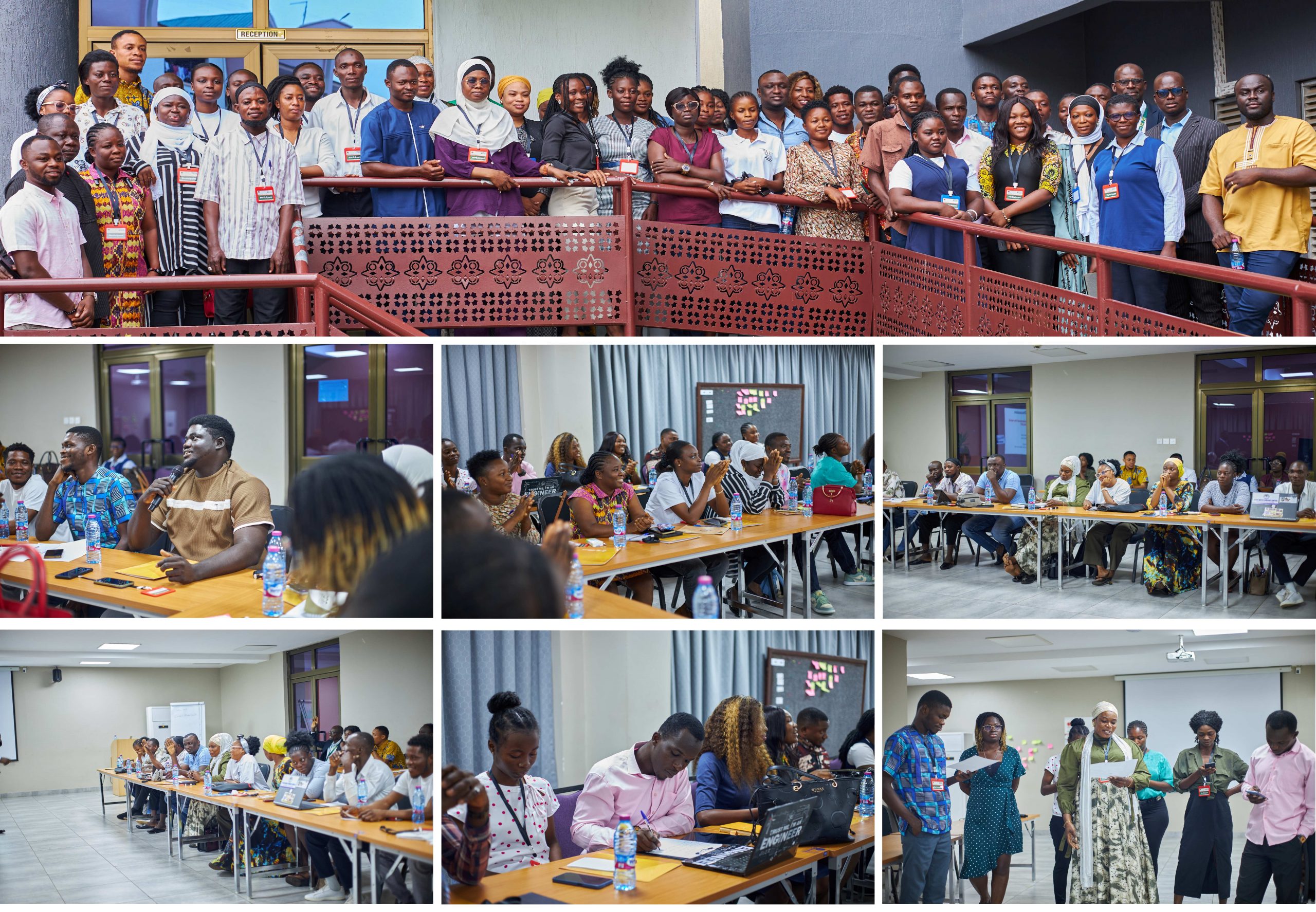
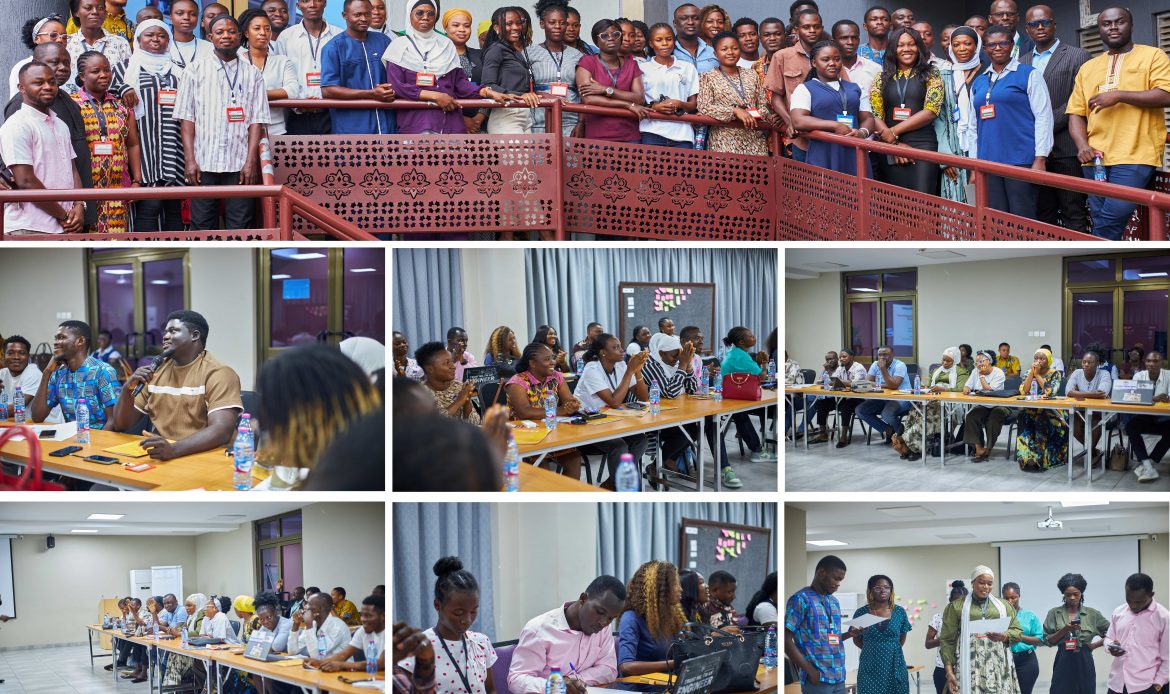
The Nkabom Collaborative, under the Mastercard Foundation in partnership with Kwame Nkrumah University of Science and Technology (KNUST), Kumasi, has commenced a specialized training programme in Agrifood Value Chain Mapping and Analysis aimed at strengthening youth participation and value addition within Ghana’s agricultural sector.
The programme gathered 50 participants nationwide and aims to reposition farming as a sustainable economic path by highlighting opportunities beyond crop production.
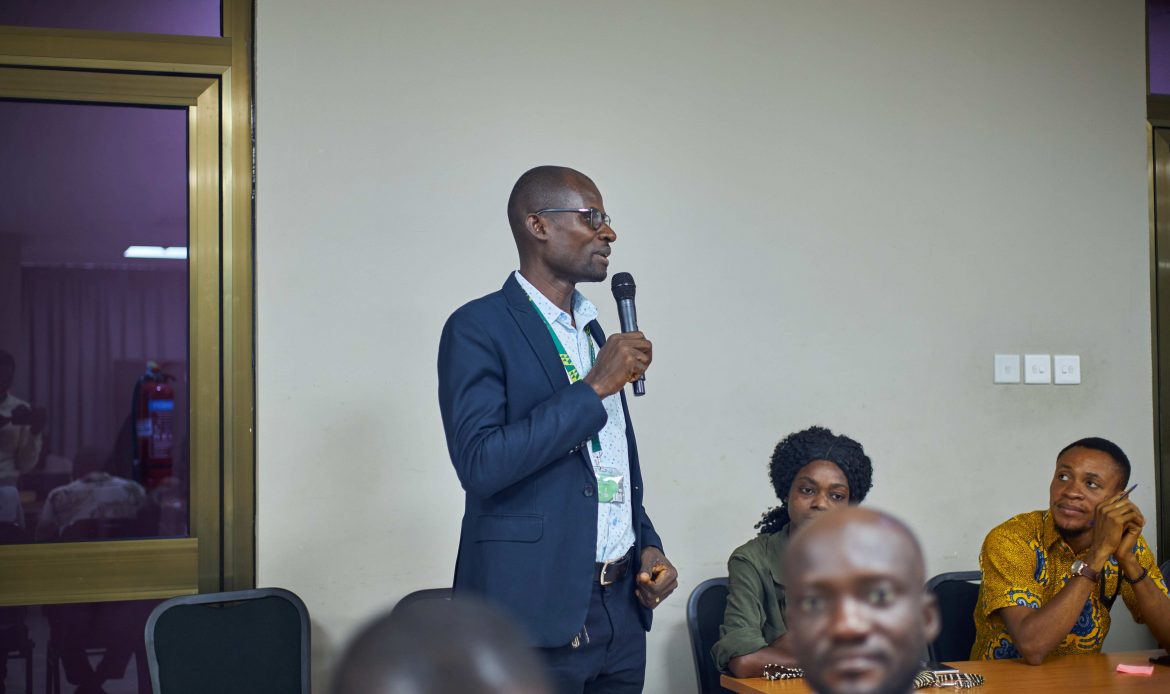
Dean of the Faculty of Agriculture, Prof. Fred Nimoh, said agriculture is the backbone of national development. “Without a strong agricultural base, industry investments risk being wasted. Agriculture provides raw materials, jobs and supports industrial growth,” he said.
Prof. Nimoh further linked agriculture to Ghana’s broader development priorities, including the Sustainable Development Goals, emphasizing that food security, poverty reduction, and employment, especially for the youth, are closely tied to how well the agricultural sector is structured and supported.

Lead facilitator Prof. Robert Aidoo said the training moves beyond traditional farming. “Many young people are not attracted to primary production. The value chain approach shows them opportunities in processing, trading and distribution,” he explained.
He said participants are learning to map value chains, identify gaps and design business models. “Success in agribusiness depends on collaboration across the chain, not isolation,” he added.
He noted that the programme equips participants with the skills to map agrifood value chains, identify constraints, and develop business models to address gaps within the system.
“We are confident that participants will understand that success in agribusiness depends on collaboration across the chain rather than working in isolation,” he stressed,

“Our previous youth trainings focused largely on primary production, but many young people do not find that attractive. The value chain concept allows us to expose them to the entire range of activities, from production to processing, aggregation, trading, and distribution,” he stated.
Another facilitator, Prof. James Osei Mensah mentioned that Ghana’s continued reliance on imported food products reflects gaps in value chain development.
“As a country, we are blessed with fertile land and natural resources, yet we still import large volumes of processed food. This is largely because we have not paid enough attention to commodity value chains,” he said.
He stressed that value addition offers major opportunities for young entrepreneurs. “Small investments in processing can meet the needs of busy, high-income consumers. The real reward in agriculture lies in value addition, not raw commodities,” he said.
“There is money in agriculture, but actors will not appreciate its value if they limit themselves to producing raw commodities. Value addition is where the real reward lies,” he noted.